2006-12-18

Pozdrav iz Beograda

(written Friday; posted when I found an internet connection)

I arrived on Thursday, after a more or less okay trip. Belgrade looks much the same, at least what can be seen of it through the fog. It looks like posting will be intermittent for a while -- we thought that we had resolved the question of internet connection in our palatial vračarska garsonjera, but in the meantime the building changed cable providers, which means we are back to step one. There are promises that this can be quickly and easily resolved.

From the first moment I began to encounter the things I like about Belgrade, which include:
Friends and family: Here they are. As it turns out, though, some of them have jobs for me to do.
Burek: This week about 93% of the people in Serbia will celebrate sv. Nikole, which is a "posna" slava (not a good thing), but as a side effect the bakeries have burek with mushrooms (a fantastically good thing).
Beogradski rokenrol: over the next two days at SKC, we have Partibrejkersi, Disciplina kičme, Obojeni program and much much more.
Beogradski radio: Every station, including the ones I don't like, has its individual character. Here is an idea for a društvena igra: look at the face of a taxi driver and try to guess what station is playing in the cab. Your guess is certain to be wrong.
People on the streets: There they are.
Of course, in addition to the things that I like, there are also other things. The first major success of the special prosecutor for war crimes, last year's Ovčara conviction, has been reversed by the Constitutional court. Last summer, when it seemed as though the far right might be returning to power, this sort of thing looked like a strategy of stretching out the cases until everybody could be pardoned; now that it seems like the upcoming elections will probably just bring a reshuffle of the balance of power between DSS and DS, it is less clear what the judges are trying to do (or prevent from happening). Maybe they would like the trials to last forever?

Politika announced today that it has placed on the web site of the Narodna biblioteka its issues from 1903 to 1941. Just 65 more years of digitizing, and it will be possible to read recent articles from the paper online as well, which every other major paper in the country offers.

On Sunday it is off to Niš. The fog, I might add, is gorgeous. I woke up this morning and looked out the window, and thought maybe someone had come in and closed the shades while I was sleeping.

2006-12-13

Svuda prođi

I'm travelling today, back at you from the sunny Balkans, if I find an internet connection.

2006-12-12

Demokratski blok

Does anyone remember the parliamentary speeches by Dragan Marković - Palma, parliamentary candidate on the DSS list, when he was a member of parliament on the list of the Stranka srpskog jedinstva? That must be because they have not been well documented.

2006-12-10

Stipe u raljama života

Follow Index and Neretva River for the developing brouhaha over stupid remarks Stipe Mesić may or may not have made in 1991, and a set of responses ranging from the inadequate to the self-incriminating, none of which makes any of the people involved look too good at all.

Update: All the same, Catherine has found grounds for pomirenje. Between Mesić and the ubiquitous Mr Thompson.

A gdje bješe taj CK?

Nikola Kavaja could have been a pioneer in terrorism in 1979, if he had known where the building he wanted to smack a plane into was located (hint: it is the only building in a huge expanse of grass). Or so he claims. He claims a lot of other stuff too, in a fascinating interview with Christopher Stewart. Some of the stuff he claims might even be true, however it sounds. But the old fellow can tell a story, he can.

2006-12-08

Two criminal cases


Vojislav Šešelj began his diet on 11 November, and ended it today. So he stuck with it just under a month, longer than I usually manage such things. Of course, he and I have in common that hunger is a choice for us, which distinguishes us both from the people who were forced into poverty when Šešelj was in power.

In other news, a mere seven years after his murder, prosecutors seem ready to bring to an investigative judge the case of the killing of Slavko Ćuruvija. Says the special prosecutor, "all indications are that it was a political killing."

Photo: Vojislav Šešelj is welcomed back to the ranks of the gluttonous by the members of Midnight Oil and ZZ Top.

Some survey results

Here is one from Danas, on the basis of a survey of 1700 potential voters by the "Scan" agency, as reported by the funnysurnamed director of the agency, Milka Puzigaća:
DS: 20%
SRS: 18%
DSS-NS: 17%
LDP-GSS-SDU-LSV: 9%
G17+: 5%
SPS: 4%
SPO: 3%
Matters change when the results are calculated on the basis of respondents who say that they are certain that they will actually vote in the election. Then it looks like this:
SRS: 28%
DS: 25%
DSS-NS: 17%
LDP-GSS-SDU-LSV: 9%
G17+: 5%
SPS: 4%
SPO: 3%
So the main difference in comparing all respondents with likely voters applies to the results for DS and SRS. This is because the highest percentage of SRS supporters (75%) declare an intention to vote, fewer supporters of DS and the LDP-based coalition say so (60%), while only half (50%) of SPS and SPO supporters declare they will vote. The reporter for Danas, R.B., did not give figures for DSS supporters -- R.B., are you reading this?

I say 1) it's too early to make predictions, and 2) the track record of preelection surveys in Serbia does not give much reason to treat results of this type as anything other than a curiosity, good for half a beer's worth of conversation. At the same time, it hardly offers a reason for headlines like the one accompanying the article by Radovan Borović (hey, wait a minute--R.B:?) in RFE-RL, "Šešeljev štrajk povećao popularnost Radikala." No it hasn't, and the higher of the potential results is still lower than their most recent result.

2006-12-06

International cooperation

Did the "Zemun clan" plan to assassinate former Croatian PM Ivica Račan as a way of returning the favor of assistance from Croatian criminal groups in the assassination of Serbian PM Zoran Đinđić? Novi list reports that they did, and Račan says that he received similar information.

Background on the news item of the day

For anybody who is interested, here is the report of the tzv. "Iraq study group" which was released today. And the cartoon version is here.

2006-12-05

More on the Dutchbat medal

The award of medals to the Dutchbat 3 soldiers who abandoned the civilians they were obligated to protect has certainly got a response! Participation in the “Aferim!” campaign (linked in the previous post) promoted by the student radio station of Sarajevo has been worldwide in scale, and there have also been press responses. This modest site has not been immune from it, either, since I posted an item on the issue yesterday. Usually East Ethnia gets somewhere between 100 and 150 visits a day. So far today there have been over 1500 visitors (and it is not yet noon here!), nearly all of them from the Netherlands, with a wide variety of responses being left in the comments. Some people are expressing agreement, some offer a different perspective, and some disagree quite vehemently. Of the ones who disagree, there seem to be a few who are under the mistaken impression that the whole issue involves somebody’s mother – I am not quite sure where this association comes from. Leaving those remarks aside, the comments offered in defence of the soldiers of Dutchbat would seem to call for me to define a position more precise than simply outrage at the awarding of medals for abject failure.

First of all, in what does the responsibility of Dutchbat consist? At bottom, in dereliction of duty. Their job was to protect the civilian population, and when the moment of decision came, they decided to protect their own personnel instead. Some of the arguments in defence of Dutchbat come down to pointing out that an effort to protect civilians would have put the soldiers at risk. This can only be persuasive if one fails to distinguish between soldiers, who take on risk as a condition of their employment, and civilians, who do not.

This is of course not the whole story, and a whole variety of other failures (as well as factors contributing to those failures) are detailed in the NIOD report, as well as in other places. In addition to political and military failures and misunderstandings, there were cultural ones, many of them detailed by Guido Snel in a very interesting reflection.

A more persuasive objection has to do with the unenviable situation in which the Dutchbat forces found themselves. The elements of this are summarized in the announcement of the NIOD report. In essence, the unit had poor instruction, poor information and communication, and inadequate support. Some of this was the result of vagueness in the conception of the UN “peacekeeping” mission in Bosnia-Hercegovina, and some of it was the result of decisions made by military commanders from Dutchbat and from forces commanded by the military of other countries.

Some of the problems have to do with problems endemic in the activity of “peacekeeping” itself. In situations in which there is no peace to keep, the activity can – and does – easily devolve into auxiliary support for the warring parties, and peacekeeping forces can easily be used as a secondary strategic resource. Many of the problems have to do with a lack of political will on the part of the UN and the most influential international political actors to take any action that went beyond giving the appearance of concern. That is to say, some of the responsibility for Dutchbat’s dereliction of duty can plausibly be transferred to other actors. This does not diminish the obligation of the commanders to act in accordance with international law and in the interest of the people they are bound to protect. How well this obligation was carried out is illustrated in the photo in the post below, showing colonel Kerremans raising a glass with Ratko Maldić. Živeli, a potom više nisu.

Probably it is the case that minister Kamp saw the distribution of medals as a gesture of reintegration of the soldiers, some of whom must have been traumatized by the obvious failure of their mission, and some of whom were deterred by their commanders from doing what a soldier is obligated to do. This sort of situation may call for therapy, certainly calls for action against the commanders and review of procedures. But a medal on the chest of an accomplice is a slap in the face to the people who trusted and depended on the forces that failed them.

2006-12-04

Valour


While the troops commanded by Ratko Mladić (price: 600 million Euros) carried out the massive killings in Srebrenica, the Dutch peacekeeping troops who were there to protect the victims did nothing. Today the members of that infamous Dutch battalion were presented with medals by their defence minister. Minister Henk Kamp says that in trading thousands of civilians under their protection, for summary execution in exchange for fourteen Dutch officers, Colonel Thom Kerremans and the rest of Dutchbat III "did their utmost." As Mr Kamp is doing, no doubt. Here is a site at which you can send a postcard of congratulations to the Government of The Netherlands, the Embassy of the Netherlands in Sarajevo, the brave soldiers of Dutchbat 3, and the Netherlands Ministry of Defence. Bravery is as bravery does, after all.

Sevdah on my mind


A friend of a friend of East Ethnia is a friend of a friend of mine, and Damir Imamović is a friend of music as well. The page linked in the last sentence is nicely designed but still awaiting its content. However, there is another page at Myspace where you can see who the musicians are, find out about upcoming performances, and download three examples of "fusion sevdah." About those upcoming performances, one of them is 12 December at the Terazijsko kazalište (two days before I arrive in town, na svoju veliku žalost). There is hope for all those people unfortunate enough not to be in Belgrade that day: they can buy the group's album for a mere nine and one half Euros, less than the price of your average published work in the social sciences.

2006-12-03

New (to me) in the blogosfera

Obviously I will have to be updating the link list. I haven't done it in ages and hope to do it soon. In the meantime, you will probably enjoy the culinary and musical explorations at Dumneazu.

In other news that will force me to deal with my aging link list fairly soon, the Serbian Mess blog has a new name and location, or so one hears anegdotally.

Being of sound mind and body

The Serbian Radical Party gave a public presentation of the political testament of Vojislav Šešelj. The fact that he is not dead only presents a problem to those for whom the distinction between the living and the dead is meaningful. Dakle, not for SRS.

2006-12-01

Spectres and their terrorist aspirations

In a dramatic warning reported by the BBC, "The US government has warned of an al-Qaeda call to attack US online stock market and banking services." The warning "was said to be in revenge for the continued detention of suspects at the US prison camp in Guantanamo Bay." But wait: said by whom? And why would al-Qaeda take revenge for detention of suspects when if there were any evidence that these suspects had anything to do with al-Qaeda, charges would have been filed against them?

It turns out that the guilt of the suspects is not the only thing for which there is a lack of evidence: "A spokesman for the Department of Homeland Security, Russ Knocke, said there was no evidence to corroborate the threat."

Now, I thought I had heard one of the most foolish phrases of my life at a recent conference I attended where somebody proposed something he called "spectral terrorism," which he defined as the consequence of terrorism in an environment where there is no terrorism. Yes, you read that correctly -- it is a fancy way of admitting that you are giving an entire presentation about something which does not exist at all, while at the same time demonstrating no shame for wasting everybody's time by talking about nothing. But here is a new one from the same Department of Homeland Security spokesman: "aspirational threat." Now, you all know what an aspirational threat is: it is a bichon frise growling at a lion, a threat that is not a threat at all, in fact, it is nothing.

Says the Department of Homeland Security spokesman, the warning was issued out of "an abundance of caution." Or possibly, an abundance of something else.

2006-11-30

Academia goes to the movies

This just came in the old e-mail. I doubt that I will get myself organised in time to respond, but maybe one of you will, yes?
From Slavic Review: Call for Papers: Borat: Eurasia, American Culture, and Slavic Studies

Few recent works of literature or film have made Eurasia as central and, perhaps, as flagrantly irrelevant to the American experience as Sacha Baron Cohen's hit film, Borat. In many respects this movie touches on key aspects of our discipline and expertise, and it also marks the distance that "Eurasia" has traveled in the American mentality since the appearance of other epoch-defining films (From Russia With Love, Doctor Zhivago, The Manchurian Candidate). Slavic Review invites its readers to submit contributions for a cluster of scholarly essays on Borat. Contributions may use the methodologies of any discipline so long as they relate in some substantial way to Borat and to interaction between Eurasia and the West.
Length should not exceed 5000 words. Contributions will be peer reviewed and must be received by the end of March 2007. If you have questions, please contact the editor, Mark Steinberg, at slavrev@uiuc.edu.

2006-11-29

Partnership for what?

The wire services are reporting from the NATO summit in Riga that Serbia, Montenegro, and Bosnia-Herzegovina have been invited to the Partnership for Peace, a sort of ante-chamber for eventual full membership. The NATO statement pointed to the "importance of long-term stability in the Western Balkans" and acknowledged the progress made so far by Bosnia and Heregovina, Montenegro and Serbia." It called on Bosnia and Serbia to honor their commitment towards the Hague war crimes court and announced it would monitor progress on the matter.

After turning a blind eye to Karadžić and Mladić for over a decade, NATO didn't have much credibility left to lose in the Balkans -- but it has somehow, inexplicably, managed to gamble away even that little bit.

2006-11-27

Delić istine

Just follow the links .... From today's report from AFP (no link, sorry) on the response of the Serbian Radical Party to the opening of their leader's trial in the Hague comes this sentence:
"While Vojislav Seselj is practically dying in The Hague, the trial was opened as if nothing is happening," said Bozidar Delic of the Serbian Radical Party (SRS).
Božidar Delić, now, that is a name known to TV fans everywhere as the retired general who found a hobby in his golden years of appearing repeatedly as a defence witness for Slobodan Milošević. Is he representing SRS now? I am not certain, but came across this account of a meeting in March, which was attended both by representatives of SRS and by the former TV personality Mr Delić. The sponsors are listed as the "International anti-NATO Movement," together with something called the "Serbian neo-Gaullists."

But follow the links, and one gets to the "National-European Communitarian Party." Their newsletter features a portrait of Ernesto Guevara, no neo-Gaullist himself, on the masthead. But perhaps El Che was a part of their "National-Bolshevik current." The party also has a link to "the situation in Serbia," which leads to a placeholder noting that the page no longer exists. Then this page autotransports the browser to a site listing a variety of activities of the group, including a heartwarming essay finally telling us the truth about Stalin. Oh, and also to the Serbian intifada. From Vladivostok to Reykjavik, preko Milvokija, bre.

But where is Waldo? I mean, Boža.

Not so much

Later than most, we finally watched the Borat film over the weekend. Our expectations were mixed, no doubt. On the one hand, we expected a lot of puerile humor and exploitation of naive subjects (but were mostly unworried about any possible sullying of the reputation of Kazakhstan). On the other hand, we were primed by a variety of media accounts presenting the oft-disguised Mr Cohen as a guerrilla comic who exposes the dark side of American life by appearing to be foolish enough to share the prejudices of his interlocutors. At the same time, saddled by disappointing experience, we arrived with the awareness that efforts to inflate characters developed for sketch comedy to the scale of the large screen usually fail.

The end result, comparing the actual viewing experience to our expectations, is that the film has a little of all that and not enough of any of it. What is disgusting is often amusing, if you like that sort of thing, but not overwhelmingly or hilariously so. What is exploitative is apparent, but not mean enough that anybody seeing it would actually care. As for the biting political satire, well, Borat unearths the surprising fact that racism exists, but there is nothing there that anybody did not already know. He has a couple of interviews with minor ex-politicians, but uses only a few seconds of footage from each; these interviews must not have gone well. In sum, what comes across on film is a bit smarter than, say, Candid Camera, but neither as revealing nor as feeling as Tito po drugi put među Srbima. There are a few moments that stand out from the howling pack of moments: most of these involve people indulging Borat for reasons unknown, but the rapidly shifting response of a rodeo audience to his rants is truly scary, and a group of drunken fratboys is distressingly recognizable.

We left the screening thinking of ways in which somebody with a similar idea might produce a truly impressive film. It would probably not be a popular hit, then. If the producers made a "making-of" documentary parallel with the film, though, that might be really fascinating. As it turned out, I walked into the theatre thinking I would disagree with Darko, but walked out agreeing.

Montenegro as it... might be?

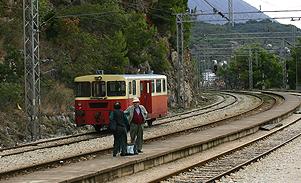
Real trains...

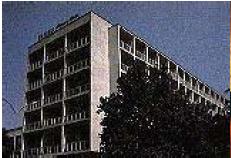
For those who have not been to Montenegro, but have watched the latest James Bond, this might be a bit of a dissapointment. The high-speed train from Switzerland to somewhere in Montenegro bears little resemblence to the Montenegrin railways today and would lose its attraction somewhere along the line of the 30 hours long journey. And the hotel is also not quite the Hotel Crna Gora... But it seems that Montenegrin tourism will profit and Casino Royal is already invoked in Montenegro's advertisment . Sorry, just no evil lair there (except maybe Radovan Karadzic's).


Fake Hotels...


...and real ones