2005-11-23
Najbolje se putuje...


2005-11-22
Uncertain future of nobody's favorite soap opera
Now it looks like there is a possibility that the show might be cancelled. When it comes back into session on 29 November, the Tribunal will consider a proposal to retroactively separate the indictments against Milošević. This would mean that they could deliver a verdict on the Kosovo indictment and hear the defence on the Croatia and Bosnia-Hercegovina indictments sometime in the future, if at all. Leaving aside the procedural decisions which led the trial to this state, that sort of half-finish without resolution would offer one more example of why the job of establishing historical truth and of contributing to peace and reconciliation is not one that should be put in the hands of lawyers. The tendency is to offer process rather than substance.
HRT and Nova TV do not sikiriki
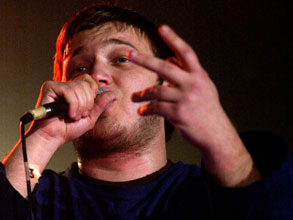
Courtesy of Index.hr, here is the full text of the song "Mater vam jebem" by Edo Maajka, for which HRT and Nova TV have decided that they would not broadcast the video spot. It is true that the song contains some of what the linguists among us call by the technical term "naughty words," but this may not necessarily be the thing that bothers the TV producers.
Mater vam jebem
Kod nas se od Dejtona godine broje, ljudi se ljudi boje i svako glasa za svoje. Brđani postaju građani, do jučer svjetla gasili sjekirama, a sad su u odjelima.
Mirnese, sredi ih Mirnese, jebi im mater, ako se ti počneš prodvat i tebi ću mater jebavat da znaš, nije bitna ideologija, bitna je biologija, bitna je genetika balije, ustaše i četnika!
Svaka ovca svome krdu. Krave uz telad, u šarena vrata gledat, jedni drugima mater jebat. Znam ko je počeo rat, znam šta je glad! Znam kad su šešeljevci došli u moj grad!
Pričamo ono kako je sad, slabo se mičemo s mjesta, puni smo rupa ko naša cesta. Često vučemo ručnu - vidiš svaki biser, išli bi naprijed ali volimo taj rikverc.
Postalo nam navika da ne radi ni jedna fabrika, malverzacije prešutimo da šefove ne ljutimo, navikli smo, na gebiru i u miru. Mladi iz zemlje bježe, izbjeglice se vratit neće ne moraju, nek zarađuju, nek nam šalju para mi ćemo živit u mraku i jedni drugima jebavat majku...
Cijela država plaća reket, po kućama oružja od rata čuje se zveket, imamo mina ko jagoda - pune oranice, ali neće brati gurodovi sto su pravili sadnice!
Bole nas kite, imamo resursa više, pogotovo metala, govana, metana, to je naš zrak i hrana, s tim nas vođe hrane. Ne znam za vas ja sam sit, u mene više ne stane. Svako kurac u državi puši, zatvara uši.
Pred nepoznatim ljudima držim jezik za zubima. Dal selam, zdravo, bog? Kako je pravo? Ne znam više šta da kažem, u sranju da se ne nađem.
Pas je ujeo bubu, sviraju ratnu trubu, ljude drukčijeg pogleda imaju na zubu, a da im isprave pogled poslaće im jedan odred da im zapaljenu kuću gledaju kroz dvogled.
Al nema ratne nevjere što može uništit temelje, onaj korijen kuće u kojem su naše duše, onu burmu i lanac što u temelj baci Bosanac. Kad kuću pravi u temelj dio sebe stavi! Srušit do temelja ne ide! Temelj, on će ostat vječan ko Sava...
Mater vam jebeeeeeem!
Mater vam jebeeeeeem!
Mater vam jebeeeeeem!
Mater vam jebeeeeeem!
2005-11-21
Just to clarify
This project has nothing to do with a new, well-financed, and to all appearances thoroughly mediocre project which is going under the name Open Source Media, which would appear to be a promotional outlet for a group of right-wing personalities from blogs and media. Their frequently-revised claims to the contrary, they would appear to be using the name of an existing organisation unethically, and perhaps trying to muscle the name away from its originators. Does anybody remember when the forgotten sycophant Dragutin Brčin attempted to do the same thing?
Update: It looks as though they have listened to the objections and no longer claiming the name. Instead they will be going as "Pajamas Media," possibly because after you have used them it is time for a shower.
In time for holiday shopping
"Ten years after the end of the war, Bosnian ethnicity continues to matter and the country remains dependent on international intervention. The Dayton Peace Accord signed in 1995 successfully ended the war, but froze the ethnic conflict in one of the most complex systems of government in the world. The book provides an in-depth analysis of governance in this divided post-war country, providing important lessons for international intervention elsewhere around the world, from Afghanistan to Iraq."Wake up early to get in line, there will be crowds for these 200 pages of pure Balkanological reading pleasure.
Back online tomorrow
So I hope to have some new items to post tomorrow, then we head off to Baltimore for a short holiday visit. We are tired of turkey, so your goose recipes, if you have them, will be received with a welcoming smile. Our destination is the home of our former neighbors, and whenever we go there I seem to get inspired to make a dish that takes two days, is delightful, and will probably never get made again.
2005-11-17
Israeli media on Tadić's visit
*He could not go swimming because he had a flu and was too busy
*The murder of Zoran Djindjić was like the murder of Yitzhak Rabin because "both were motivated by a desire to put an end to historical processes."
*He wants to commemmorate Serbian and Jewish victims in "a memorial center for the common tragedy of our two peoples, which will be built in Belgrade, where two concentration camps were located during the Nazi occupation."
*He sees a parallel between the sense of threat in both states, as (the reporter's words) "many Serbs feel close to and identify with Israel; they feel a common sense of victimization, justified or not. Israel is fighting Palestinian terrorism, and Serbia feels threatened by Albanian terrorism in the fight over Kosovo, most of whose residents are Muslims who want independence from Serbia."
All said, the interview is typical Tadić: a little bit of moderation, a little bit of opportunism, a little bit of playing to the extremes. It makes for an interesting set-piece on hybridity and the uses of victimisation.
Do animals harass people with lawsuits?
2005-11-16
Moral foreign policy?
2005-11-15
Blog Against Racism Day, 1 December
What's in a name?
2005-11-14
Treatment for blogophobia
2005-11-13
Prediction: Something might happen, maybe
Confronting and understanding the extreme right
A similar but more detailed perspective is outlined in sociologist Isidora Jarić's interview in Politika, where she details the results of a series of surveys on questions of hopelessness, inclination toward extreme perspectives, and the possibility of violence. B92's article concludes with a brief discussion of whether purely punitive approaches can address the problem.
Carnival of the Balkans #4!!!!
 The fourth Carnival of the Balkans is up over at Science and Politics! This is the most exhaustive and diverse Balkan carnival ever, featuring Balkan blogs in many languages from around the world. Have a look and see what people are writing about, and what sorts of communications they are getting from their neighbors. Previous editions are archived at the Balkan carnival site.
2005-11-12
Study in Eastern Europe!
A reunion in question
(For my part, I am not certain that "Honvéd" is a very specific term. It would seem to be more or less an equivalent of "domobran," and it appears in the names of many military institutions, as well as providing the name for a popular football club. Perhaps this is a bit of vojvođanski shorthand for something else?)
Update: A brief summary of what J. Tomasevich (War and Revolution in Yugoslavia, 1941-1945, pp. 168-174) has to say on the matter -- the Hungarian occupation concentrated most of its nastiness, especially the dispossession and deportation of civilians, to 1941. Otherwise, the German minority exercised far more real power. By late 1943, Germany had substituted its own power for that of the Horthy regime in every sense but the most formal, and did so in the formal sense by installing Ferenc Szálasi in October 1944. Germany evacuated many Volksdeutsche from Vojvodina when it was clear that territory would be lost, but not many people who were not Volksdeutsche.
2005-11-10
Little fascists
Odd as it may seem, appearing publicly as "fascists" is probably as far as these marginal and confused young people can get in terms of associating their behavior with something that people recognize. The tolerance of decent folks is probably the best treatment they will ever receive as well. If real fascists were ever to come to power thanks to their efforts, their "shock troops" would probably be among their earliest victims, as in the Night of the Long Knives.
Update: See the comments for the full text of the statement from the Independent Association of Journalists of Vojvodina (NDNV).
Update 2, 11 November: It looks like the police in Novi Sad are beginning to arrest members of the neo-Nazi group "Nacionalni stroj" after all. But they also want to file charges against the organisers of the meeting that was attacked for failing to file notice of a public meeting. Balance or something, what? But then the balance is upset again -- somebody is smashing the windows on shops owned by Chinese businesspeople in Valjevo.
Islamist Terror Strikes Again!
I don't know where to start with this thing. First, it's totally unsourced. It says, "A British police dragnet has raised suspicion..." but doesn't tell us who is holding that suspicion. It says (in the hed, which probably wasn't written by the reporter) "Police fear..." but never tells us who told the reporter. But let's check the substance.
Police fear that terror suspects arrested in Denmark are linked to a British plot to attack the US White House A British police dragnet has raised suspicion that nine terrorist suspects arrested in Denmark and Bosnia are linked to a plan to attack the White House and other strategic targets in the United States.
British police became interested in one of the suspects after they arrested three men in London and found they had had email correspondence with a man living in Bosnia. The man living in Bosnia had been suspected of running a network that sought to draw alienated youths to the rebellion in Iraq.
Seven 16-20-year-olds are currently under arrest in Denmark along with two 18-year-old men in Sarajevo, one of Danish-Turkish heritage and the other from Sweden, in connection with the find of cache of weapons and explosives in Sarajevo.
Two days after the two were arrested in Sarajevo, British police arrested three people in Great Britain on suspicion of planning a terror attack on The White House.
The three men had apparently been in email correspondence with someone in Sarajevo who used the codename 'Maximus'.
Police in Denmark and Bosnia arrest a bunch of people. Then the Brits arrest three more folks, apparently in an investigation that was at first unrelated. They find that
The sole connection between the UK arrests and those in Denmark and Bosnia seems to be this 'Maximus' guy -- but the article doesn't even tell us whether those arrested in Denmark and Bosnia were ever in touch with him!
I'm not denying the very real danger of radicalism in Bosnia, or the potential for terrorism there. But the fact is that all of it is so far just speculation -- and I hope it'll remain that way.
